Articulo Escultura Cubana
Por Rosario Novoa
El arte de nuestro siglo, está viviendo una Aventura difícil y arriesgada: pretende hallar un estilo adecuado capaz de ofrecer una imagen convincente de su propia realidad.
Crea el artista tratando de penetrar el abismo de un futuro incierto, en un presente cargado de signos de tragedia y sin poder ignorar la presión del pasado que se ejerce sobre él de mil maneras diferentes.
Registra el arte de hoy con nítida precisión, la variedad de esfuerzos realizados hasta el presente por encontrar respuestas adecuadas a las múltiples preguntas que unas veces recibe el artista desde fuera y otras brota de su propia intimidad.
La obra de arte contiene, por su carácter de fenómeno cultural, el pensar y el sentir de su creator dentro del marco de su civilización, de aquí su valor documental; pero además al expresarse con un estilo propio, ofrece materiales no menos valiosos a la Ciencia del Arte y a la Filosofía de la Historia del Arte. El mundo presente –mezcla confusa y aterradora de esperanzas y decepciones—ofrece al hombre un panorama de dispersión y antagonismos sacudido por dos espantosas conflagraciones mundiales y la amenaza de una tercera y definitiva… Se plantea hoy, con urgencia inaplazable la pregunta acerca de lo que busca el artista, cuál es el anhelo al realizar su obra y la respuesta más valida es la de que busca –no importa no sea consciente de ello—la expresión de su mundo, darle forma a su modo intimo de comprenderlo en tal manera, que las aspiraciones e ideales de la cultura, el ambiente en que trabaja el artista plasmados en ella constituyan un aporte al logro de un “estilo”.
La trascendencia de la función social del arte aumenta constantemente y no por capricho, ya que la búsqueda de un nuevo estilo obedece al surgimiento de una situación nueva también, para la cual han dejado de tener vigencia los estilos históricos.
El hombre como centro del universo va perdiendo terreno rápidamente y una nueva concepción de la vida, nos situa en un contorno hostil, cuando más indiferente, planteando una vez más la dualidad hombre-mundo con su inevitable secuela de inseguridad y angustia.
La situación antes apuntada, nos urge a buscar formulas capaces de hacer posible la convivencia, mientras en el terreno del arte, aparecen creaciones expresivas de la medula de la época y de los esfuerzos por alcanzar la armonía y serenidad, suprema aspiración del hombre.
Entre todas las corrientes señalables en el arte en lo que va de siglo, es el arte abstracto con sus experimentos con formas nuevas, el que trata, aun sin saberlo muchos de sus cultivadores, de dominar transformando la realidad del medio físico. Las facilidades de comunicación en la actualidad unifican los problemas y nos hacen participes de acontecimientos muy distantes pero jamás podrán anular por completo el lazo que une el hombre a un lugar determinado donde vive y trabaja, impregnándolo de una savia propia.
Aquellos artistas que hoy pretenden permanecer al margen de estos cambios –que exigen una nueva forma plástica capaz de expresarlos con lenguaje apropiado—renuncian a la tarea que desde siempre les ha venido asignada.
Existen actualmente evidencias bastante claras de que después de mucho tiempo, nos acercamos de nuevo a una gran época escultórica, puesto que este arte, plenamente identificado con la vida pública, se incorpora por doquier a los vastos proyectos que exigen adecuados conjuntos plásticos.
La libertad e intensidad con que puede expresarse un artista en cualquiera de las tendencias escogidas, convierte en inútil la separación antagónica entre arte figurativo y no-figurativo.
Debe sin embargo señalarse, que persiste el alejamiento total de la imitación, los efectos ilusionistas, privando en cambio la tendencia hacia formas elementales, creadas libremente y sujetándose a las propiedades intrínsecas de los materiales empleados.
Tan importante como lo anterior es la transformación del concepto de “masa” (compacto, estático), sustituido por la relación de planos abiertos en el espacio, el énfasis en la estructura lineal o la calidad de los materiales que contribuyen a la creación de volúmenes aéreos, expresando la fusión espacio-temporal de manera cara y directa.
Preocupa al artista dar vida al espacio que rodea las formas, tanto como el que emana de ellas, en realidad las figuras y los objetos han dejado de aparecer desvinculadas del espacio circundante y como situadas en una cámara aislante. Concepto espacial que tiene sus antecedentes directos en el estilo barroco.
Los temas escultóricos abandonan el tono descriptivo o narrativo de la belleza de la forma física, tratando por el contrario de trasmitirnos aspectos universales de hechos espirituales o naturales de manera simbolica. Este carácter, unido al poder concedido a la imaginación y la poesía, acercan al escultor moderno a aquellas etapas del arte que le son afines.
Cuba, país sin tradición escultórica colonial, ofrece en el siglo XX una expresión de audacia muy brillante y relativamente temprana, n importa que los iniciadores, después de algunos logros realmente extraordinarios, abandonaran el camino emprendido o se hayan auto limitado dentro de una modalidad estilística cuya vitalidad se ha ido estratificando hasta perder el contacto con la verdadera creación.
Ellos no obstante, merecen nuestro respeto por haber liberado a nuestro arte incipiente, de las tendencias conformistas y académicas que aniquilaban las posibilidades de nuevas formas de expresión.
El número relativamente reducido de escultores que realmente cuentan en el panorama del arte cubano actual, no excluye que entre ellos se encuentren claramente representadas las tendencias dominantes en la plástica universal de los últimos quince años, es decir desde el final de la segunda guerra mundial, cuando el antagonismo de las corrientes escultóricas precedentes parece mitigarse, arribando a una suerte de asimilación de los aspectos positivos de las más importantes.
La producción escultórica cubana, registra de manera eficaz en sus caracteres la aparición de esa corriente que ha liberado a la escultura de la dependencia anterior a la pintura, acercándola como era lógico a la arquitectura cuya esencia comparte y cuyos medios espacio-forma son idénticos.
Entre los escultores activos en estos momentos, hemos seleccionado tres, que a nuestro juicio ejemplifican los rumbos de la plástica cubana: Alfredo Lozano, Roberto Estopiñan y Tomás Oliva.
Lozano, con veinticinco años de labor seria y tesonera, trabaja partiendo siempre de formas del mundo exterior con una marcada preferencia por la figura humana y abordando con éxito temas anomalísticos. Es de los tres escogidos el que ofrece escultura de asunto religioso, de la cual nos ocuparemos más tarde.
La recia personalidad de este artista que siente las formas como energía, se expresa con una vitalidad directa a veces brutal. Aún los temas que piden el suave juego de las curvas, las líneas fluidas tienen la gravedad de su expresionismo angular y dinámico que priva sobre todo otro carácter. Acompañan estas notas, dos ilustraciones de obras suyas recientes: “Despedida”, sabicú, 1955 (colección Val Fidanque, Nueva York); y “Crisálida”, 1959 (para los jardines del Teatro Nacional).
En Despedida, hermoso trozo de sabicú, marca la dirección vertical, en tanto aprovecha las vetas de la madera para desarrollar el ritmo dominante, desde la parte inferior derecha hasta la mano abierta apoyada contra el rostro y que encuentra su contrapunto en las formas también redondeadas con las cuales cierra la composición. Las líneas movidas de la silueta exterior, juegan con el espacio que la rodea y unos resquicios muy bien situados, rompen el bloque interior.
La Crisálida, reúne el dinamismo de las formas orgánicas y una gran dosis de poesía, en una muy lograda síntesis de forma y espacio. En ella, más que en los ejemplos anteriores, se pueden encontrar los signos de la nueva belleza escultórica, capaz de dar vida a una nueva realidad plástica.
Lozano se encuentra ahora, en plena madurez y sin perder las cualidades esenciales que hace veinte años señaláramos en sus obras de juventud, ha depurado y enriquecido su expresión artística, cargada siempre de profundo sentido humano. Roberto Estopiñán, artista muy precoz, ha recorrido un largo camino hasta llegar en años recientes, a una reorganización e invención de elementos formales cada vez más ceñida. Sus obras en general, tienden a situase en la frontera de lo desprovisto de implicaciones orgánicas definidas, prefiriendo aquellos esquemas que se acercan, desde un ángulo artístico naturalmente, al mundo de lo mecánico. Sus trabajos en metal, prodigios de finura en la ejecución y el acabado, se inclinan a glorificar el mundo de formas impuesto a nuestra época por la técnica, sin que en ellas falte ese “temblor” que se resuelve en armonía o gracia ni ese toque emocional, que distingue la obra de arte del instrumento científico.
Para los jardines del Teatro Nacional (ya realizado) es el bronce que aquí aparece, obra de factura exquisita con gran preocupación por las texturas, bien balanceados sólidos y vacíos, llena de sabiduría plástica erguida y segura, como signo de los tiempos de la conquista de otros espacios.
La obra abundante de este artista joven, contiene elementos que permiten esperar una larga y brillante contribución a la escultura universal.
Extraordinario contraste con los dos anteriores, ofrece el más joven, Tomás Oliva –nacido en 1930—integrante del grupo de Los Once, reunidos por razones generacionales durante algún tiempo, separados más tarde por urgencias individuales más fueres que la comunidad de problemas que engendra la coetaneidad. Temperamento apasionado, gusta de la lucha abierta con los materiales, por eso prefiere el metal, trabajando mucho el hierro, cuyas formas, dejan de parecer inertes, para animarse corroídas por fuerzas terribles y adversarias de una vida nueva transida de angustia.
Preocupado por el espacio llega –según sus palabras—a la forma abstracta partiendo del cuerpo humano en movimiento. Sus realizaciones, en general de gran tamaño, logran la tridimensionalidad por la combinación e intersección de planos o la curvatura de las superficies. Muchas de sus obras están pensadas teniendo en cuenta la sombra que puedan proyectar, creando nuevos efectos. Siente la escultura absolutamente ligada a la arquitectura y el ambiente. Repasar la colección de sus dibujos y proyectos es asomarse a una sensibilidad poderosa y sincera. La obra en ejecución para el Teatro Nacional que aquí se reproduce refleja un instante de reposo por la selección del esquema y la relación serena entre los diversos planos. El material, acero y las calidades que pueden obtenerse de su tratamiento representan un marcado contraste con las otras obras ilustradas, verdaderos combates desiguales, en los cuales Oliva indiscutiblemente ha resultado triunfador. Creemos necesario anotar aquí, que la escultura cubana, se mueve al ritmo de la escultura universal y en vano buscaremos en ella la nota local, el dato pintoresco, solo en la selección preferente de ciertas formas, puede encontrarse indicio de la influencia subjetiva del ambiente.
Es necesario esperar, quizás algunos años, para comprobar si la profunda transformación operada en nuestro medio, encuentra su equivalente plástico dentro de lo que ya creemos puede llamarse “estilo del siglo XX”.
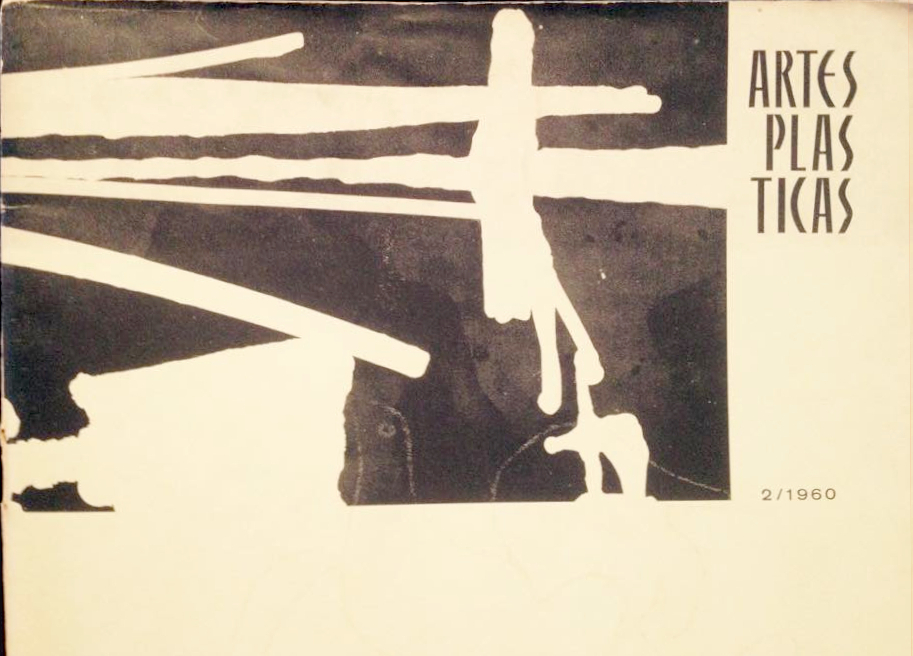
(Tomado de Revista Artes Plásticas 2/1960, dirección general de cultura ministerio de educación habana).

Cuban sculpture
By Dr. Rosario Novoa
The art of our century is experiencing a difficult and risky adventure: it tries to find an adequate style capable of offering a convincing image of its own reality.
The artist creates trying to penetrate the abyss of an uncertain future, in a present loaded with signs of tragedy and unable to ignore the pressure of the past that is exerted on him in a thousand different ways.
It registers today's art with clear precision, the variety of efforts made up to the present to find adequate answers to the multiple questions that the artist sometimes receives from outside and other times arises from his own intimacy.
The work of art contains, due to its character as a cultural phenomenon, the thinking and feeling of its creator within the framework of his civilization, hence its documentary value; but also by expressing himself with his own style, he offers no less valuable materials to the Science of Art and to the Philosophy of Art History. The present world – a confused and terrifying mixture of hopes and disappointments – offers a man a panorama of dispersion and antagonisms shaken by two frightful world conflagrations and the threat of a third and definitive one… The question of what is What is the artist looking for, what is the desire when carrying out his work, and the most valid answer is that he is looking for -it doesn't matter if he is not aware of it- the expression of his world, to give shape to his intimate way of understanding it in such a way that the aspirations and ideals of the culture, the environment in which the artist works embodied in it constitute a contribution to the achievement of a "style".
The importance of the social function of art is constantly increasing and not on a whim since the search for a new style is due to the emergence of a new situation, for which historical styles have ceased to be valid.
Man as the center of the universe is rapidly losing ground and a new conception of life places us in a hostile environment, at best indifferent, raising once again the man-world duality with its inevitable sequel of insecurity and anguish.
The aforementioned situation urges us to look for formulas capable of making coexistence possible, while in the field of art, expressive creations from the core of the time and efforts to achieve harmony and serenity appear, as the supreme aspiration of man. Among all the noteworthy currents in art so far this century, it is abstract art with its experiments with new forms, the one that tries, even without knowing many of its cultivators, to dominate by transforming the reality of the physical environment. Communication facilities currently unify problems and make us participants in very distant events, but they will never be able to completely annul the bond that unites man to a specific place where he lives and works, impregnating it with his own sap.
Those artists who today intend to remain outside of these changes—which demand a new plastic form capable of expressing them with appropriate language—relinquish the task that has always been assigned to them.
There is currently quite clear evidence that after a long time, we are once again approaching a great sculptural age, since this art, fully identified with public life, is everywhere incorporated into vast projects that require adequate plastic ensembles.
The freedom and intensity with which an artist can express himself in any of the chosen tendencies make the antagonistic separation between figurative and non-figurative art useless.
However, it should be noted that the total distance from imitation and illusionary effects persists, instead depriving the tendency towards elemental forms, freely created and subject to the intrinsic properties of the materials used.
As important as the above is the transformation of the concept of "mass" (compact, static), replaced by the relationship of open planes in space, the emphasis on the linear structure or the quality of the materials that contribute to the creation of volumes aerial, expressing the space-time fusion in an expensive and direct way.
The artist is concerned about giving life to the space that surrounds the forms, as much as the one that emanates from them; in reality, the figures and objects have ceased to appear detached from the surrounding space and as if located in an insulating chamber. The spatial concept has its direct antecedents in the Baroque style.
The sculptural themes abandon the descriptive or narrative tone of the beauty of the physical form, trying on the contrary to convey to us universal aspects of spiritual or natural events in a symbolic way. This character, together with the power granted to imagination and poetry, brings the modern sculptor closer to those stages of art that are related to him.
Cuba, a country without a colonial sculptural tradition, offers in the 20th century a very brilliant and relatively early expression of audacity, no matter that the initiators, after some truly extraordinary achievements, abandoned the path they had taken or limited themselves within a stylistic modality whose vitality has been stratified until losing contact with the true creation.
They, however, deserve our respect for having freed our incipient art from the conformist and academic tendencies that annihilated the possibilities of new forms of expression.
The relatively small number of sculptors who really count in the panorama of current Cuban art does not exclude that among them are clearly represented the dominant tendencies in the universal plastic arts of the last fifteen years, that is, since the end of the Second World War, when the antagonism of the previous sculptural currents seems to be mitigated, arriving at a kind of assimilation of the positive aspects of the most important ones.
Cuban sculptural production effectively registers in its characters the appearance of that current that has freed sculpture from its prior dependence on painting, bringing it closer, as was logical, to architecture whose essence it shares and whose space-form means are identical.
Among the currently active sculptors, we have selected three, who in our opinion exemplify the directions of Cuban plastic art: Alfredo Lozano, Roberto Estopiñan, and Tomás Oliva. Lozano, with twenty-five years of serious and tenacious work, always works starting from forms of the outside world with a marked preference for the human figure and successfully addressing anomalistic themes. It is one of the three chosen that offers a sculpture of a religious subject, which we will deal with later.
The strong personality of this artist who feels forms as energy expresses himself with a direct and sometimes brutal vitality. Even the themes that ask for the soft game of the curves, the fluid lines have the gravity of his angular and dynamic expressionism that deprives of all other characters. These notes are accompanied by two illustrations of his recent works: “Farewell”, sabicú, 1955 (Val Fidanque collection, New York); and “Crisálida”, 1959 (for the gardens of the National Theater).
In Farewell, a beautiful piece of sabicu, he marks the vertical direction, while taking advantage of the wood grain to develop the dominant rhythm, from the lower right part to the open hand resting against the face and which finds its counterpoint in the also rounded shapes. With which the composition closes. The moved lines of the exterior silhouette, play with the space that surrounds it, and some very well-located loopholes, break the interior block.
La Crisálida, brings together the dynamism of organic forms and a large dose of poetry, in a very successful synthesis of form and space. In it, more than in the previous examples, one can find the signs of the new sculptural beauty, capable of giving life to a new plastic reality.
Lozano is now in full maturity and without losing the essential qualities that we pointed out twenty years ago in his youthful works, he has refined and enriched his artistic expression, always charged with a deeply human sense. Roberto Estopiñán, a very precocious artist, has come a long way until, in recent years, he has come to an increasingly tight reorganization and the invention of formal elements. His works in general tend to be located on the border of what is devoid of defined organic implications, preferring those schemes that are close, naturally from an artistic angle to the world of the mechanical. His works in metal, prodigies of finesse in execution and finishing, are inclined to glorify the world of forms imposed on our time by technique, without missing that "tremor" that is resolved in harmony or grace or that touch emotional, which distinguishes the work of art from the scientific instrument.
For the gardens of the National Theater (already made), it is the bronze that appears here, an exquisitely made work with great concern for textures, well-balanced solids, and voids, full of upright and confident plastic wisdom, as a sign of the times of the conquest from other spaces.
The abundant work of this young artist contains elements that allow us to expect a long and brilliant contribution to universal sculpture.
The youngest, Tomás Oliva –born in 1930– is an extraordinary contrast with the two previous coetaneity passionate temperament, he likes the open struggle with materials, which is why he prefers metal, working a lot with iron, whose shapes stop seeming inert, to come alive corroded by terrible and adversary forces of a new life filled with anguish.
Concerned with space, he arrives –according to his words- at the abstract form starting from the human body in movement. His realizations, generally large, achieve three-dimensionality by the combination and intersection of planes or the curvature of the surfaces. Many of his works are designed taking into account the shadow they may cast, creating new effects. He feels the sculpture is absolutely linked to the architecture and the environment. Going through his collection of drawings and projects is to peek into a powerful and sincere sensibility. The work in progress for the National Theater that is reproduced here reflects a moment of rest due to the selection of the scheme and the serene relationship between the various shots. The material, steel, and the qualities that can be obtained from its treatment represent a marked contrast with the other illustrated works, true unequal battles, in which Oliva has unquestionably been the winner. We believe it is necessary to note here that Cuban sculpture moves to the rhythm of universal sculpture and in vain we will search in it for the local note, the picturesque data, only in the preferential selection of certain forms, can we find an indication of the subjective influence of the environment.
It is necessary to wait, perhaps a few years, to see if the profound transformation taking place in our environment finds its plastic equivalent within what we already believe can be called "20th-century style".
(Taken from Revista Artes Plásticas 2/1960, General Directorate of Culture, Ministry of Education, Havana)
(Tomado de Revista Artes Plásticas 2/1960, dirección general de cultura ministerio de educación habana).
The work for the National Theater, stainless steel, 1959
(1) The work described above was destroyed after Tomas Oliva left Cuba as part of a discrediting campaign orchestrated with political motivations after he quit his job as National Director of Fine Arts of the Council of Culture of Cuba in 1970. This was not the only monumental work of his that suffered similar consequences at the time, nonetheless, a few of them survived (Translated by Tomas Oliva Jr.)